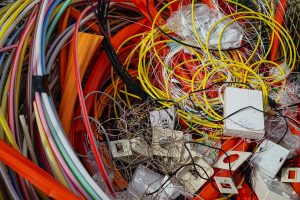
Wire and cable represent some of the most valuable materials electricians and other tradespeople recycle. However, the apparent simplicity of “copper cable” conceals significant complexity. Different cable types, insulation thickness, contamination levels, and preparation methods all dramatically affect value. This comprehensive guide explains wire and cable recycling, helping you maximise returns.
Why Cable Grading Matters
A metre of 1.5mm twin and earth versus a metre of 95mm single core armoured cable contains vastly different copper quantities. Insulation thickness relative to conductor size dramatically affects recovery percentages. Understanding these differences enables realistic value expectations and optimal preparation decisions.
Copper Content
The actual copper weight determines base value. Everything else—insulation, armouring, contamination—reduces the percentage of valuable material in each kilogram of cable.
Recovery Economics
Processing insulated cable involves costs. Equipment, labour, and time all factor into the price difference between clean copper and insulated cable. These processing costs explain pricing structures.
Market Dynamics
Cable processors with modern equipment can handle insulated cable more efficiently than those with older methods. This affects pricing across the recycling sector.
Cable Categories Explained
Bright Copper Wire (No.1 Copper Wire)
The premium category. Bare, clean, uncoated, unalloyed copper wire at least 1.3mm diameter with absolutely no contamination, solder, or attachments. This represents the highest value copper form.
To achieve bright copper wire classification, cable must be completely stripped of insulation and absolutely clean. Any contamination, even minor, downgrades the material. Most electricians encounter this grade only when stripping heavy cables where stripping time is economically justified by the value increase.
Heavy Insulated Cable (High Recovery)
Large cables where insulation represents a small proportion of total weight. Examples include 95mm single core, 185mm cables, and other substantial conductors. These cables contain 85-95% copper by weight.
Heavy cables often justify the time required for stripping, but many customers prefer selling insulated due to labour requirements. Pricing reflects high copper content, making these valuable even with insulation intact.
Medium Insulated Cable (Standard Recovery)
Cables where insulation represents moderate proportions of total weight. Armoured cables in common sizes (16mm, 25mm, 35mm, 50mm), larger twin and earth, and standard single core cables in moderate sizes fall here.
Copper content typically ranges from 60-85% depending on specific cable type and construction. This category represents much of the cable electricians recycle—substantial enough to have significant value but not heavy enough that stripping is usually economical.
Light Insulated Cable (Low Recovery)
Smaller cables where insulation represents significant proportions of total weight. Domestic twin and earth (1.5mm, 2.5mm), small singles, and flex cables fall into this category.
Copper content may be only 30-50% of total weight. While still valuable, pricing per kilogram is proportionally lower due to processing requirements and lower copper recovery. Stripping light cable is rarely economical.
Mixed Insulated Cable
Assorted cable types combined together. This category receives pricing for the lowest value cable present or average pricing across the mix. Mixed cable reduces value because processors cannot optimise recovery methods when cable types vary.
Aluminium Cable
Some cables use aluminium conductors rather than copper. These require separate handling as aluminium value differs significantly from copper. Common in larger power distribution cables and some modern applications.
Contaminated Cable
Cable with significant contamination including excessive dirt, oil-soaked cable, burnt insulation (beyond minor surface burning), cable with substantial steel fixings, or cable mixed with other materials significantly.
Armoured Cable Considerations
Steel Wire Armoured (SWA) cable contains valuable copper but also includes steel armour that adds weight without adding proportional value. The steel armour represents additional processing complexity.
Outer Sheath – PVC or similar outer covering (minimal value impact)
Steel Armour – Woven or helical steel wires protecting the cable (add weight, require separation from copper)
Inner Sheath – Protective layer over conductors (similar to insulation on standard cable)
Conductors – The actual copper or aluminium conductors (the valuable component)
Armoured cable pricing reflects the need to separate steel from copper during processing. Despite this, larger armoured cables remain valuable due to substantial conductor sizes.
The Economics of Cable Stripping
Should you strip insulation to achieve bright copper prices? The answer depends on several factors.
Cable Size
Heavy cables (70mm+) often justify stripping. The copper value increase versus stripping time makes economic sense. Light cables (under 10mm) rarely justify stripping due to low copper volume relative to stripping time.
Your Time Value
An electrician billing £40+ per hour typically cannot justify spending time stripping cable. The value increase rarely exceeds what you could earn working. Apprentices or employees on fixed wages might strip cable during quiet periods.
Quantity
Stripping small quantities rarely makes sense. Large quantities might justify hiring labour specifically for stripping if rates justify this.
Available Tools
Hand stripping is very slow. Mechanical strippers increase efficiency but require investment and skill. Wire burning is illegal and damages copper value through oxidation and contamination.
Pricing Differential
The price difference between insulated cable and bright copper must justify the effort. This differential varies with market conditions.
For most trade electricians, selling insulated cable provides better overall returns when labour time is valued appropriately. The exception is very heavy cables or situations where stripping occurs during otherwise idle time.
Preparation for Maximum Value
Even when not stripping cable, simple preparation improves returns significantly.
Separate Cable Types
Keep heavy cables separate from light cables. Keep armoured separate from non-armoured. Keep copper separate from aluminium. This separation enables accurate grading and optimal pricing.
Remove End Fittings
Brass glands, steel terminals, and other fittings should be removed. These add weight without adding proportional value to cable. Remove them and recycle separately—brass fittings have good standalone value.
Remove Excessive Contamination
Cable pulled from muddy trenches or oil-soaked environments should be cleaned if practical. Excessive contamination downgrades material significantly.
Cut to Manageable Lengths
Very long cable sections are unwieldy. Cutting into 1-2 metre sections assists handling and processing. However, cutting into tiny pieces isn’t beneficial and may suggest stolen material.
Keep Dry
Water adds weight without adding value. Store cable under cover, and if it becomes wet, allow it to dry before weighing.
Honest Presentation
Don’t hide low-value cable inside high-value cable. Mixed loads receive pricing for lowest value material. Honest presentation ensures optimal overall pricing.
Common Cable Types and Expected Recovery
1.5mm Twin and Earth – Approximately 40-45% copper content. The most common domestic cable generates significant volume but relatively modest value per kilogram.
2.5mm Twin and Earth – Approximately 45-50% copper content. Ring circuits and larger domestic applications generate substantial quantities.
4mm Twin and Earth – Approximately 50-55% copper content. Cooker circuits and larger installations use this size.
6mm Twin and Earth – Approximately 55-60% copper content. Shower circuits and larger fixed equipment circuits.
10mm Twin and Earth – Approximately 60-65% copper content. Getting into territory where stripping might be considered by some, though usually still uneconomical for trade electricians.
16mm 4-Core Armoured – Approximately 65-70% copper content. Common for submain cables in commercial installations.
25mm 4-Core Armoured – Approximately 70-75% copper content. Larger submain and distribution applications.
35mm+ Armoured Cables – 75-85% copper content depending on core configuration and overall size. High-value cables even when insulated.
95mm Single Core – Approximately 90%+ copper content. Very high value, sometimes justifying stripping for maximum returns.
Flexible Cables (Leads) – 35-45% copper content typically. Highly flexible insulation is thicker relative to conductor size.
These percentages are approximate—exact figures depend on specific cable construction, manufacturer, and standards compliance.
What Reduces Cable Value
Mixed Loads
Combining cable types means the entire load receives pricing for average or lowest value material.
Excessive Contamination
Oil, dirt, or other contamination reduces value by adding weight and increasing processing difficulty.
Burnt Insulation
Beyond minor surface burning, extensive burning damages copper (oxidation) and complicates processing.
Attached Components
Cable with junction boxes, switches, or other components still attached adds weight without value.
Very Short Pieces
While not drastically reducing value, extremely short pieces (under 15cm) suggest possible stolen material and complicate processing.
Aluminium Mixed with Copper
These different metals require separate processing. Mixed loads reduce both materials’ value.
Non-Cable Materials
Cable mixed with other scrap (steel, plastic, general rubbish) significantly reduces value.
Legal Considerations
Wire and cable theft remains a significant problem nationally. Legitimate recycling operations must guard against accepting stolen material.
Identification Requirements
Scrap Metal Dealers Act 2013 requires identification from all sellers. This protects both parties.
Source Questions
Legitimate operators ask about material sources. Trade customers with business identification rarely face detailed questions. Private individuals may be asked more questions, particularly for large quantities.
Red Flags
Very short cable pieces, cable still attached to walls/buildings, cable with utility company markings, overhead cable with ceramic insulators, and suspicious circumstances all warrant additional scrutiny.
Trade Credentials
Electricians and contractors with business identification, vans with company markings, and professional presentation rarely face difficulties. These indicators demonstrate legitimate trade sources.
Documentation
All transactions are documented comprehensively. This protects legitimate sellers while creating audit trails that deter theft.
Pricing Dynamics
Cable prices fluctuate with copper market prices. The London Metal Exchange (LME) provides the basis for copper pricing globally. Recycling prices reflect LME prices minus processing costs, profit margins, and market conditions.
Daily Variations
Prices change daily with LME movements. Economic factors, currency fluctuations, and global demand all influence copper prices.
Market Position
Different recycling operations offer different prices based on their processing capabilities, market positions, and business models.
Quantity Impact
While price per kilogram generally remains consistent regardless of quantity, very large loads sometimes enable slightly improved pricing.
Relationship Value
Regular customers with established relationships sometimes receive preferential treatment. Building relationships with recycling facilities benefits long-term returns.
Volume Considerations
Storage
Accumulating cable over time maximises efficiency. One trip with 100kg generates better returns than ten trips with 10kg each, simply by eliminating time and fuel costs.
Frequency
Find the balance between accumulation benefits and storage space limits. Many electricians visit monthly, balancing efficiency with space constraints.
Collection Threshold
For very large quantities, collection services become viable. Discuss collection thresholds with recycling facilities—they vary by operation and location.
Regional Variations
While copper pricing follows national patterns, regional factors create some variation including proximity to processing facilities, local competition levels, and regional demand factors.
NM Recycling’s pricing reflects current market conditions, our processing capabilities, and our commitment to fair dealing across our operating region.
Special Circumstances
Commercial Projects
Large commercial installations generate substantial cable quantities. Project-based arrangements can include on-site collection, dedicated containers, and consolidated payment.
Cabling Contractors
Businesses specialising in data cabling or electrical installation generate continuous cable waste. Regular collection services and account facilities support these operations.
Workshop Clearances
Accumulated cable from years of work often emerges during workshop clearances or business closures. We handle varied cable types and large quantities efficiently.
Renovation Projects
Complete building rewires generate all original cables as recyclable material. These project-based collections provide convenient waste management.
Building Long-Term Value
Understanding cable recycling builds over time. Each transaction provides learning opportunities about cable types, grading, and pricing. This knowledge benefits trade professionals and informed domestic customers.
Ask Questions
We explain grading decisions and answer questions about cable types and values. Understanding helps you prepare future loads optimally.
Observe Patterns
Notice which cables command premium prices and which represent lower value. This awareness informs future material handling.
Consider Total Economics
Balance cable recycling returns against the time required to manage materials. Sometimes simpler approaches generate better overall returns when time value is factored.
Getting Expert Advice
Every NM Recycling facility provides advice on cable recycling. Whether you’re an experienced electrician or handling a one-off domestic project, our team offers guidance on cable grading, pricing expectations, and preparation approaches.
Contact us to discuss specific cable types, get current pricing information, or arrange collection services for substantial quantities. Our decades of experience mean we can advise on virtually any cable recycling scenario.
Contact NM Recycling for Cable Recycling
Call 01206 231534 | Visit nmrecycling.co.uk